Origin & historical context
Physiognomic writing existed in ancient Greece, China, South Asia, and other settings. In eighteenth- and nineteenth-century Europe it was recast as a supposed science and entangled with racial hierarchy and criminology.
GLOBAL CULTURE ATLAS / CULTURE ENTRY
面相Observed forms
Face reading and physiognomy encompass historically distinct practices that infer character, fortune, or health from appearance. They should not be merged into one universal method.
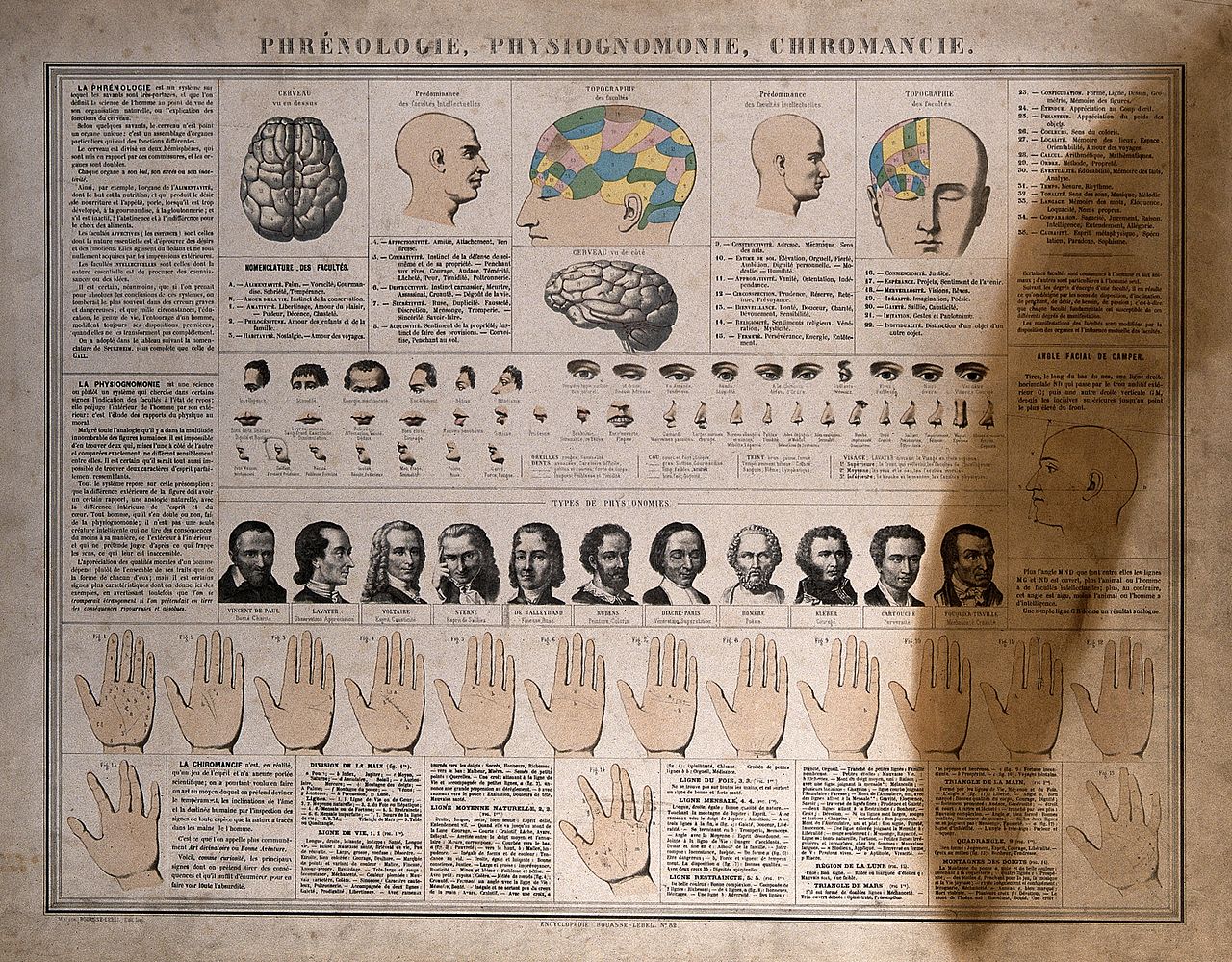
A historical chart shown critically: its classifications are not scientific facts.
Wellcome Collection · CC BY 4.0DOCUMENTED CULTURAL HISTORY
Historical context, living practice, collection imagery, and further reading are presented together. Every image links to its source and license record.
Physiognomic writing existed in ancient Greece, China, South Asia, and other settings. In eighteenth- and nineteenth-century Europe it was recast as a supposed science and entangled with racial hierarchy and criminology.
Manuals classify shapes, proportions, complexion, expressions, and marks according to local correspondences. These classifications reflect historical values, not reliable measures of personality.
China, South Asia, the Mediterranean, Europe, and beyond
Face reading and physiognomy encompass historically distinct practices that infer character, fortune, or health from appearance. They should not be merged into one universal method.
Physiognomy is rejected as pseudoscience, yet similar claims reappear in popular culture and automated face analysis. Historical study can expose, rather than repeat, those harms.
Never infer character, intelligence, health, or worth from a person’s facial features.
CONTEXT, NOT INSTRUCTIONThis page is intended for cultural and historical learning. It will not present the tradition as scientifically proven or make medical, financial, or supernatural guarantees.