MATHEMATICS × QUANTUM PHYSICS × ASTRONOMY × CHINESE THOUGHT · 11 MIN
Why do seven, quantum entanglement and black holes fascinate us?
- Orient Qi Editorial
- Checked against an open paper and official NIST and NASA material
- Published: September 1, 2026
- Updated: September 1, 2026

Three boundaries first: explained, unresolved and analogous
Seven has fully defined mathematical properties. Entanglement statistics are repeatedly verified. General relativity describes many observable effects outside black holes. Open questions include quantum measurement interpretations, a quantum foundation for gravity and whether a singularity is physical or a sign that theory has reached its limit. Taiji and Bagua can frame relation and change, but they are neither quantum equations nor astronomical models.
01 · Seven: rigorous, yet culturally restless
Seven is prime; a regular heptagon is not exactly constructible by classical unmarked straightedge and compass; and seven is 111 in three-bit binary. Mathematics explains the structure, not why cultures repeatedly load seven with meaning.
02 · Entanglement: counterintuitive, not telepathy
Bell tests reject a broad class of local, pre-written-answer models. Quantum theory predicts the statistics, but individual outcomes are uncontrollable, so entanglement cannot send faster-than-light messages or prove distant effects among jewelry, minds or fate.
03 · Black holes: a known boundary with an unknown interior
Event horizons, gravitational lensing and bent light follow general relativity. At the singularity, relativity and quantum theory are not yet unified. That specific theoretical gap does not make every story equally plausible.
Where seven and Bagua genuinely meet in mathematics
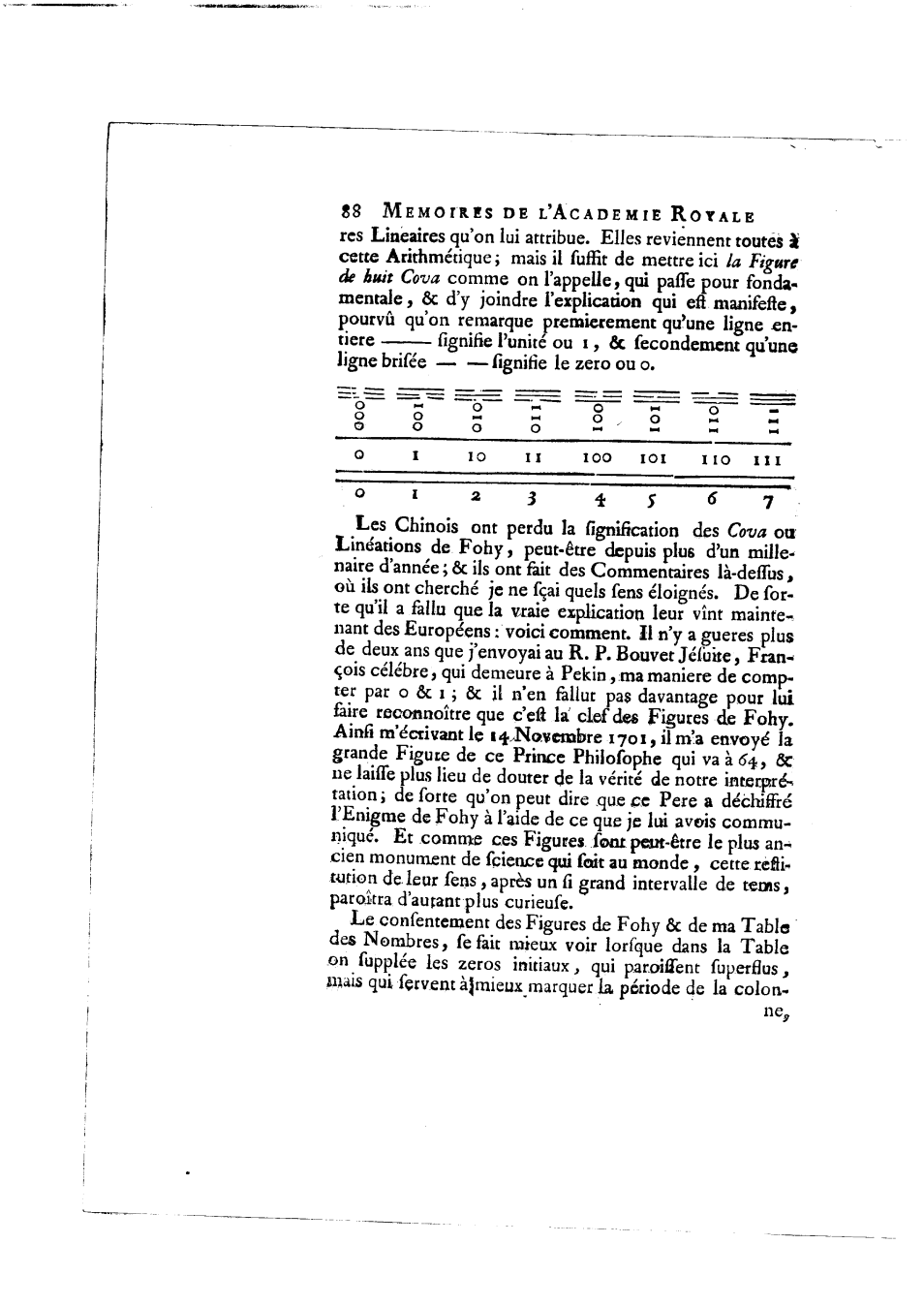
In his 1703 Explanation of Binary Arithmetic, Leibniz placed binary numbers beside line figures attributed to Fuxi. Three lines, each broken or unbroken, yield 2³ = 8 combinations; seven corresponds to 111. This is a beautiful structural correspondence. It does not prove that Bagua was a modern computer or that binary arithmetic validates supernatural readings.
Four expressions clarify the boundary
Seven in three-bit binary
7₁₀ = 111₂Three yin-yang lines
2³ = 8Bell–CHSH bound
|S| ≤ 2 · quantum limit 2√2Non-rotating black-hole scale
rₛ = 2GM / c²What exactly remains unexplained about entanglement?
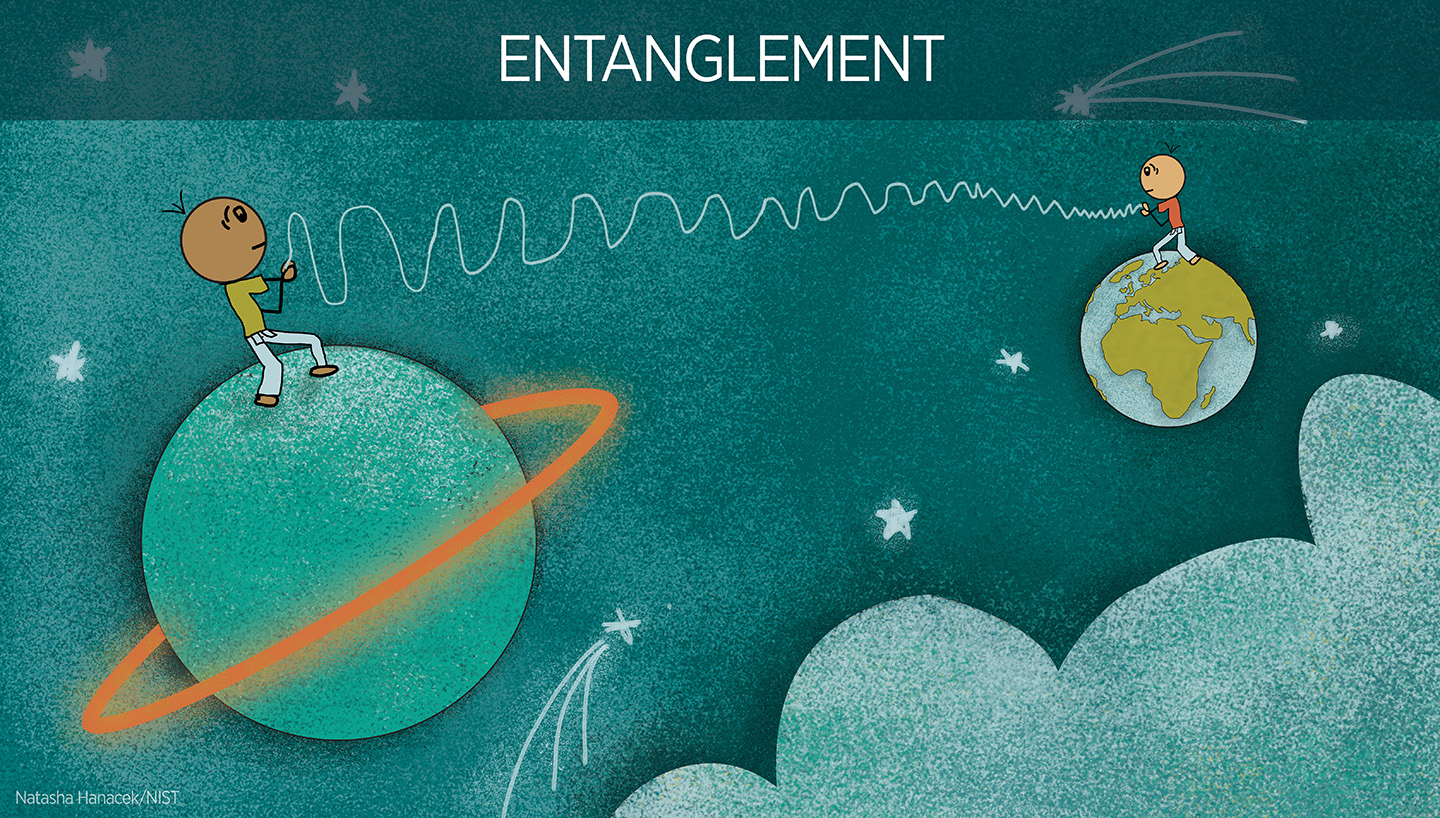
Entanglement is not theory-free: quantum mechanics predicts its probabilities with extraordinary accuracy, and experiments observe Bell-inequality violations. The debate concerns what the mathematics says reality is—interpretations differ on measurement, the wavefunction and realism. NIST also states that randomness prevents faster-than-light communication. Taiji language can inspire a metaphor of mutual formation; using it as experimental evidence for universal resonance crosses the boundary.
| Theme | What science can say | Relation to Taiji and Bagua |
|---|---|---|
| Seven | Primality, 111₂ and classical heptagon non-constructibility are provable; cultural preference has no single natural law. | Three binary lines generate states 0–7: a precise combinatorial correspondence. |
| Quantum entanglement | Correlations and Bell violations are testable; outcomes cannot be controlled for superluminal signaling. | It can prompt analogy about relation, but yin-yang lines are not quantum states and hexagrams are not detectors. |
| Black holes | Horizons and lensing have theoretical and observational support; singularities and quantum gravity remain open. | A black-white circle may resonate visually, but a Taiji diagram is not a black-hole model. |
| Theology and natural philosophy | They can ask meaning and existence questions, but unfalsifiable claims cannot be presented as experiments. | They supply interpretive frameworks with a different method and evidence level from natural science. |
| Orient Qi seven-bead and Five Elements design | Bead count, material, color, size and arrangement can be disclosed. | Seven and Five Elements are cultural and design grammar, not quantum, astronomical or medical efficacy. |
“Unexplained” is not a blank cheque
Scientific unknowns are specific: a measurement is inaccessible, theories conflict, or a prediction lacks a test. Unknown does not make every mystical claim equally credible. This essay treats Taiji and Bagua as cultural-philosophical language and entanglement and black holes as testable physical subjects. They may converse, but they cannot borrow each other’s evidence.
Four questions for reading science-and-mystery content
- Is the statement a replicated observation, a theoretical explanation or an untested conjecture?
- Is the image from a paper or research institution, and does the caption say measured, simulated or artistic?
- Has a cultural analogy been quietly converted into causation, healing, wealth or action at a distance?
- A product can disclose material, dimensions and craft; unverifiable “cosmic energy” should not be a purchase reason.
Three common misreadings
Is seven scientifically the universe’s most mysterious number?
No such ranking exists. Seven has rigorous mathematical properties and frequent cultural use; the first is provable, while the second needs historical, cognitive and social study.
Does entanglement prove telepathy?
No. Bell tests concern prepared and measured quantum systems. They cannot be directly extended to communication among minds, jewelry or fate.
Did Taiji and Bagua discover quantum mechanics early?
No. Bagua and binary structure support a real mathematical comparison, one Leibniz discussed. Quantum mechanics depends on a distinct mathematical theory, repeatable experiments and instruments.
Open paper, institutional images and verification
- Leibniz (1703): open scan of Explanation of Binary Arithmetic
- NIST: official quantum-entanglement illustration
- NIST: loophole-free Bell test and local realism
- NIST: why entanglement cannot communicate faster than light
- NASA: black-hole illustration, description and download
- NASA: black-hole singularities and the limits of present theory
- NASA: why general relativity still lacks a quantum foundation
- MathWorld: the classical non-constructibility of a regular heptagon
- NIST: public-information and image-credit policy
- NASA: image and media usage guidelines
Keep wonder for the unknown and honesty in design
Orient Qi can carry stories of number, Five Elements and Bagua. What reaches your hand returns to disclosed materials, bead count, color, dimensions and craft. The seven-rice-bead design makes seven a rhythm, not an efficacy claim.